Advanced Settings 3

Advanced Settings 3

توسط

Advanced Settings is a powerful WordPress plugin that provides settings you would expect to find in the WordPress core. It is lightweight, performant and offers a modern, fast and user-friendly interface.

🚀 PERFORMANCE
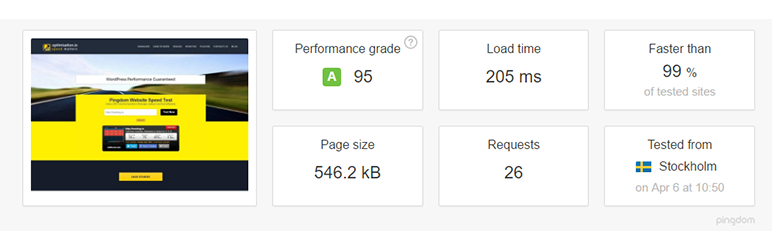
Advanced Settings 3 is optimized for extreme performance. It even loads only necessary PHP.
details in FAQ

🪶 LIGHTWEIGHT
Advanced Settings 3 is lightweight (only about 0.5 MB) and discreet (no dashboard hijacking).
details in FAQ

🔒 SECURITY
Advanced Settings 3 has been independently reviewed for security vulnerabilities via Patchstack.
details in FAQ

✳️ INFO ABOUT THE 2 BAD RATINGS
Bad ratings occurred in 2017 because users used outdated PHP versions, but can’t happen again.
details in FAQ

FEATURES

🩷 FEATURE REQUESTS ARE WELCOME
Advanced Settings 3 was developed to help as many users as possible. If you’d like to see a feature added to this plugin, please let us know. Don’t worry, we’ll keep the plugin fast and lean; this is a high priority for us. We’ll only implement features that don’t conflict with this.

Admin Area

  • Hide the top admin bar for all users in the frontend
  • Hide WordPress update message in dashboard
  • Hide the welcome panel in the dashboard
  • Hide the default widgets in the dashboard 💥 new
  • Customize the admin area branding 💥 new

Frontend

  • Remove PHP version from HTTP headers 💥 new
  • Add security HTTP headers 💥 new
  • Automatically add FavIcon (when favicon.ico, favicon.png or favicon.svg exists in template folder)
  • Add Facebook Open Graph meta tags
  • Remove shortlink meta tag
  • Remove RSD (Weblog Client Link) meta tag
  • Remove WordPress generator meta tag
  • Automatically add description meta tag using blog description and post excerpt (SEO)
  • Disable author pages
  • Remove wptexturize filter
  • Disable auto embed of external content 💥 new
  • Limit excerpt length
  • Add “Read more” link after excerpt
  • Remove trackbacks and pingbacks from comment count
  • Protect email addresses from spam bots
  • Compress HTML code
  • Remove HTML comments (except conditional IE comments)
  • Disable emoji image replacement

Editing

  • Disable posts auto saving
  • Limit post revisions 💥 new
  • Allow SVG uploads for admins 💥 new
  • Downsize images on upload to max size
  • Set JPEG quality
  • Add thumbnail support
  • Automatically generate post thumbnail (from first image in post)

System

  • Hide default WordPress favicon
  • Disable comment system
  • Disable XML-RPC 💥 new
  • Disable public REST API 💥 new
  • Prevent installation of new default WordPress themes during core updates
  • Disable email notifications for core updates
  • Disable email notifications for plugin updates
  • Disable email notifications for theme updates
  • Create custom post types 💥 renewed

Developer

  • Display SQL queries and page load time

Configuration

  • Show/hide deprecated features
  • Show/hide experimental features
  • Configure tracking consent for feature usage statistics
  • Configure visibility of user guide

Contribute on github: github.com/eHtmlu/advanced-settings

  1. Upload the plugin to your WordPress plugins directory
  2. Activate the plugin through the WordPress plugin menu
  3. Go to Settings > Advanced in the WordPress admin menu
  4. Use the tab navigation to access different settings sections
  5. Configure your desired settings in each section

سوالات متداول

Will the plugin become slower with more features?

Short answer:
No, due to the way the plugin is designed, it would still be just as fast even with thousands of features. Don’t worry, we don’t add thousands of features.

Detailed answer:
Advanced Settings 3 works as follows: Only when you open the plugin’s settings window does the plugin recognise which settings are actually available. When saving, only the activated settings are written to a separate cache file. Only this cache file is then taken into account during operation. This means that slowdowns can only occur due to active features. However, as some features deactivate WordPress functions, the plugin can actually make WordPress even faster than in the standard configuration.

How can the plugin be lightweight despite so many features?

Short answer:
Typically, graphical user interfaces represent the largest chunk of data. Since we have largely standardized the user interface for all features, additional features are of little importance.

Detailed answer:
The plugin is currently only 0.5 MB in size. Only about a third of that is used for the actual functionality of the features. The rest is used for the graphical user interface, backward compatibility, performance optimization, and the like. So if we doubled the number of features, the plugin would still be smaller than 0.7 MB. Theoretically, we could quadruple the number of features and still stay under 1 MB. So the number of features isn’t crucial. The trick is to standardize everything around the features so that each additional feature has minimal impact.

We are passionate about lightweight plugins that remain politely in the background while you work, so we can assure you that this will continue to be the case.

How is the security of the plugin ensured?

Short answer:
The experienced plugin developer is additionally supported by the Patchstack community to ensure the security of the plugin.

Detailed answer:
The plugin is currently maintained by senior web developer Helmut Wandl, who has over 25 years of experience in web development. He is therefore familiar with various common security concepts for many years.

In addition, the plugin is monitored by the Patchstack community, and if security vulnerabilities are discovered, they are reported and fixed by the plugin developer immediately or as soon as possible, depending on the urgency.

How can I report security bugs?

You can report security bugs through the Patchstack Vulnerability Disclosure Program. The Patchstack team helps validate, triage and handle any security vulnerabilities. Report a security vulnerability.

What caused the two bad ratings?

Short answer:
The bad ratings arose because a plugin update at the time no longer supported a very outdated PHP version, which unfortunately a few users were still using. However, due to a new WordPress feature, this cannot happen again.

Detailed answer:
The plugin developer at the time had decided in 2017 to use PHP features that were introduced with PHP 5.4. Support for the previous version, PHP 5.3, had already been officially discontinued by The PHP Group 3 years earlier. It was therefore natural to assume that all websites actually in use had already been converted to PHP 5.4 or newer. Unfortunately, this was not the case for a few users.

Nowadays, WordPress allowes to specify in the plugin metadata which PHP version is required as a minimum for the plugin, so that users can only update the plugin if they are using the correct PHP version. While this WordPress feature came too late to prevent the problems and the negative reviews, this problem can fortunately be prevented in the future.

It would be great if you could contribute with your own review to ensure that the ratings reflect the quality of the plugin.

×
نظری برای این آیتم موجود نیست.
0 0 رای ها
امتیازدهی
اشتراک در
اطلاع از
0 نظرات
قدیمی‌ترین
تازه‌ترین بیشترین رأی
نسخه حجم فایل SHA256 تغییرات دانلود
3.3.0 122 کیلوبایت -
دانلود
×
★★★★★
★★★★★
3.9 /5 (7 نظر)

قیمت:

رایگان

نگارش

3.3.0

آخرین انتشار

21 اردیبهشت 1405

آخرین بروزرسانی

3 ماه پیش

نصب های فعال

200+

نگارش وردپرس

وردپرس 5.0.0+

تست شده از نسخه

وردپرس 6.9.4

نگارش PHP

PHP 7.4+

نسخه ها

1 نسخه